
On Orpheus' Tauroctony and Kheiron's Cave
Part Four on the Allegory in the Orphic Argonautika
This is Part Four of an ongoing series.
Click these links to read Part One, Part Two, and Part Three.
There was also This Post between Part Three and Part Four.
This is a long post, it may not all show in your inbox. Read it in full here.
Orpheus’ Tauroctony
In Part Three, we left off just after our heroes had launched the Argo and elected Jason their leader. In the upcoming lines, as the sun sets and night looms overhead, Jason hatches a plan to have the Argonauts take an oath of loyalty. Jason has Orpheus prepare a sacrifice, and Orpheus sacrifices a bull and removes its heart to place atop the sacrificial pyre. Then, he tells each of the heroes to gather in a circle around the slain bull and to stab it with their weapons and rub their hands in the gory mess. Having done that, Orpheus prepares a kykeon of grain, sea water, and the sacrifical bull’s blood. The Argonauts all share the kykeon, Jason lights the sacrificial pyre, and Orpheus invokes a number of deities important to sailing, plus Dikē and the Erinyes, and the Argonauts all nod in agreement to remain allied to Jason at least until they make it home. I translate1:
And when Helios that boundless aither cleaving
with swift-footed horses was preparing the dark night,
then in his mind planned Aison’s son
a pledge among the heroes and oaths of agreements
to establish, so that firmly keeping all things they might trust.
And then mind you, Mousaios, dear child of Antiophemos,
he ordered me to prepare swiftly sacrifices beautiful.
Then I upon the sandy shores heaped
logs, and those are from a life-bearing oak; and then up on top
peploi I placed for the Gods poured-upon gifts. *
And then indeed the ruler of cattle, a very long bull
I slaughtered, lifting its head into the divine aither
cutting it alive; and blood around the pyre I was pouring here and there.
Then after having drawn its heart on sacrificial cakes I placed it,
having libated liquid oil, and upon that milk of a lamb,
then the heroes I commanded standing in a circle gathered around
to fasten spears and hilted swords,
on both the skin and on the entrails leaning with palms.
And I placed indeed in the middle, of kykeon propping a bowl
earthenware, in which all things very skillfully had been mixed,
indeed first Demeter’s life-giving barley meal,
and upon it the blood of the bull and the sea’s salty water.
And to crown themselves I commanded with lovely circles of olive;
and then a golden phiale with my hands **
having filled with kykeon, in succession I distributed
to taste, each man of the very mighty kings.
And on the pyre I commanded Jason to place a torch
of dry pine; and from under raced the God-sent flame.
Indeed then I, toward the much-roaring stream of the sea
my hands having stretched out, thus from the tongue spoke:
“Rulers of the ocean and of the wave-washed sea,
deep-dwelling blessed ones, and those who sandy shores
with sea-pebbles inhabit and Tethys’ furthest water,
Nereos indeed firstly I call oldest of all,
together with fifty daughters all of them lovely,
and gleaming fish-full infinite Amphitrite,
Proteus and Phorkys and wide-strength Triton,
and swift Winds mixed with Breezes golden-soled,
Stars shining-from-afar and also mist of dark night
and the foreguiding beam of Helios’ swift horses,
Daimons of the sea and mingling themselves with Heroes,
and Coastal Gods and of Rivers’ sea-salty streams,
and himself son of Kronos the Earth-Shaker blue-haired,
from the wave having leapt out to come as helper of oaths;
for the time being then indeed the allies of Jason steadfastly always
let us remain willingly defenders of common struggles,
alive let us come home each one toward his own halls;
but whoever should ever violate the treaty not heeding
the oath by transgression, and to him let them be witnesses against,
the straightener Dikē and the Erinyes givers of dread.”
Thus I spoke; and they immediately with like-mindedness nodded
dreading the oaths, and they signaled by hands.2
Although the above does not describe a particularly unique ancient sacrifice or oath, the passage in lines 313-315, “and then indeed the ruler of cattle, a very long bull / I slaughtered, lifting its head into the divine aither / cutting it alive”, brings to mind the image of the Mithraic Tauroctony. Because the poem was written in the 4th c. CE, the poet must have been aware of the Mithraic cults. “Tauroctony” is a modern word, from a Greek one, meaning “Bull-slaying”3, which describes the various similar scenes found throughout the Roman Empire in Mithraea showing the Mystery-God Mithras doing just that.
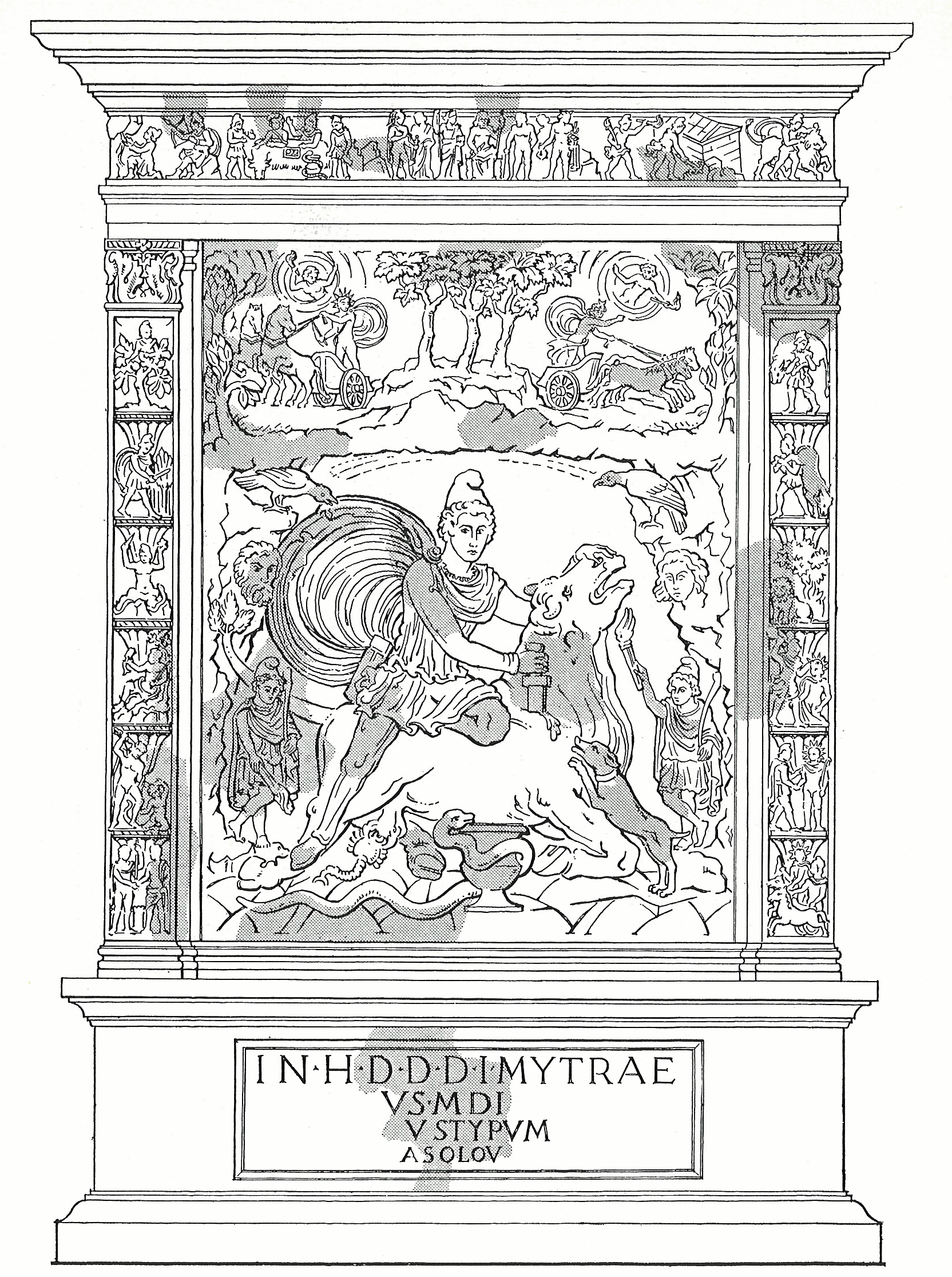
This drawing is a reconstruction of a Tauroctony found in France4. They are not all this elaborate, but they do all contain the central image of Mithras, in a Phrygian cap and cloak, pulling a bull’s head skyward in the middle of a sacrificial kill. In those earlier lines from Orpheus’ Argonautika, the Bard describes himself slaughtering a bull by “lifting its head into the divine aither / cutting it alive”, which is exactly what we see here.
Also, Mithras wearing a cloak and especially a Phrygian cap is something that is shared with Roman (and earlier) depictions of Orpheus. For example:
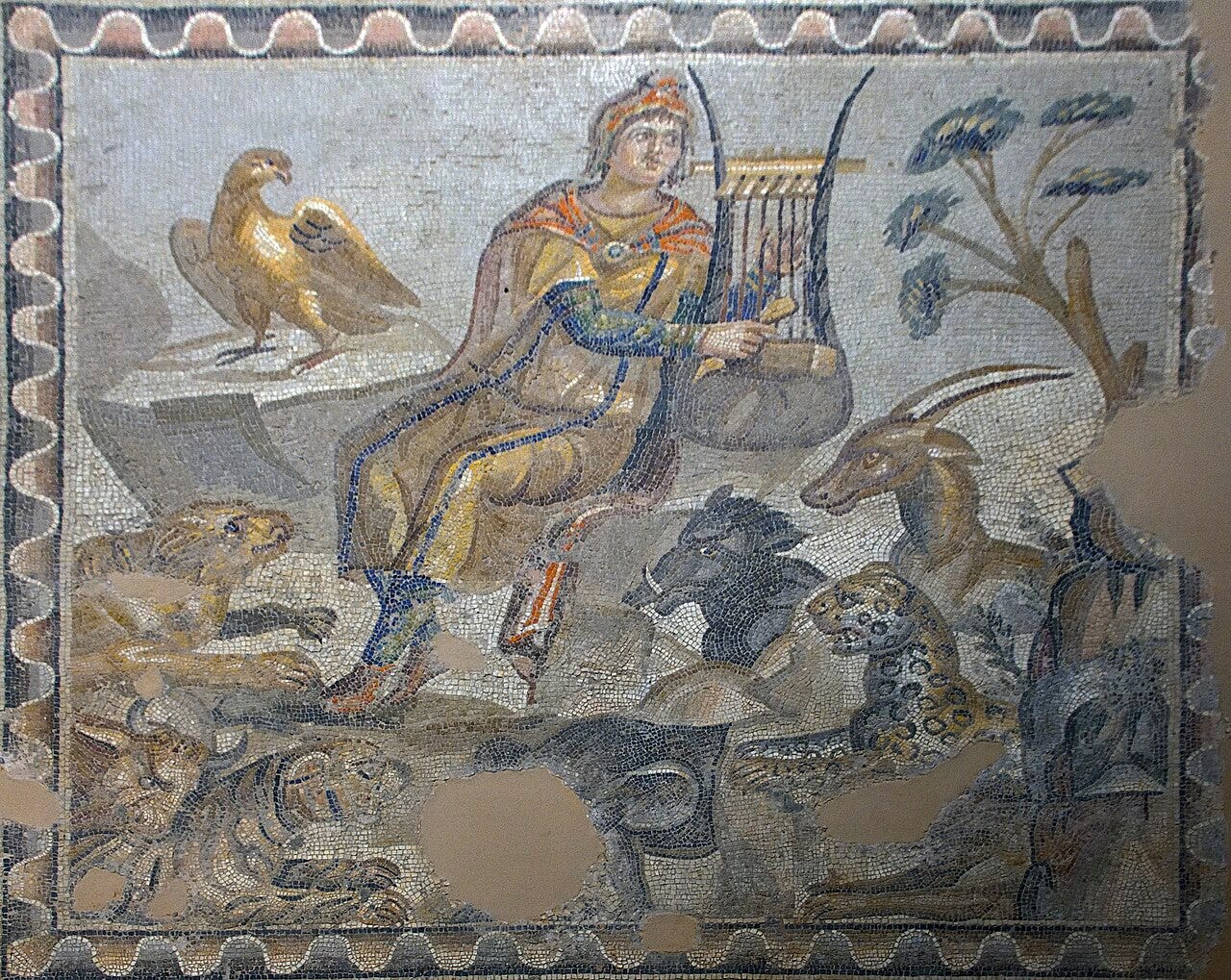

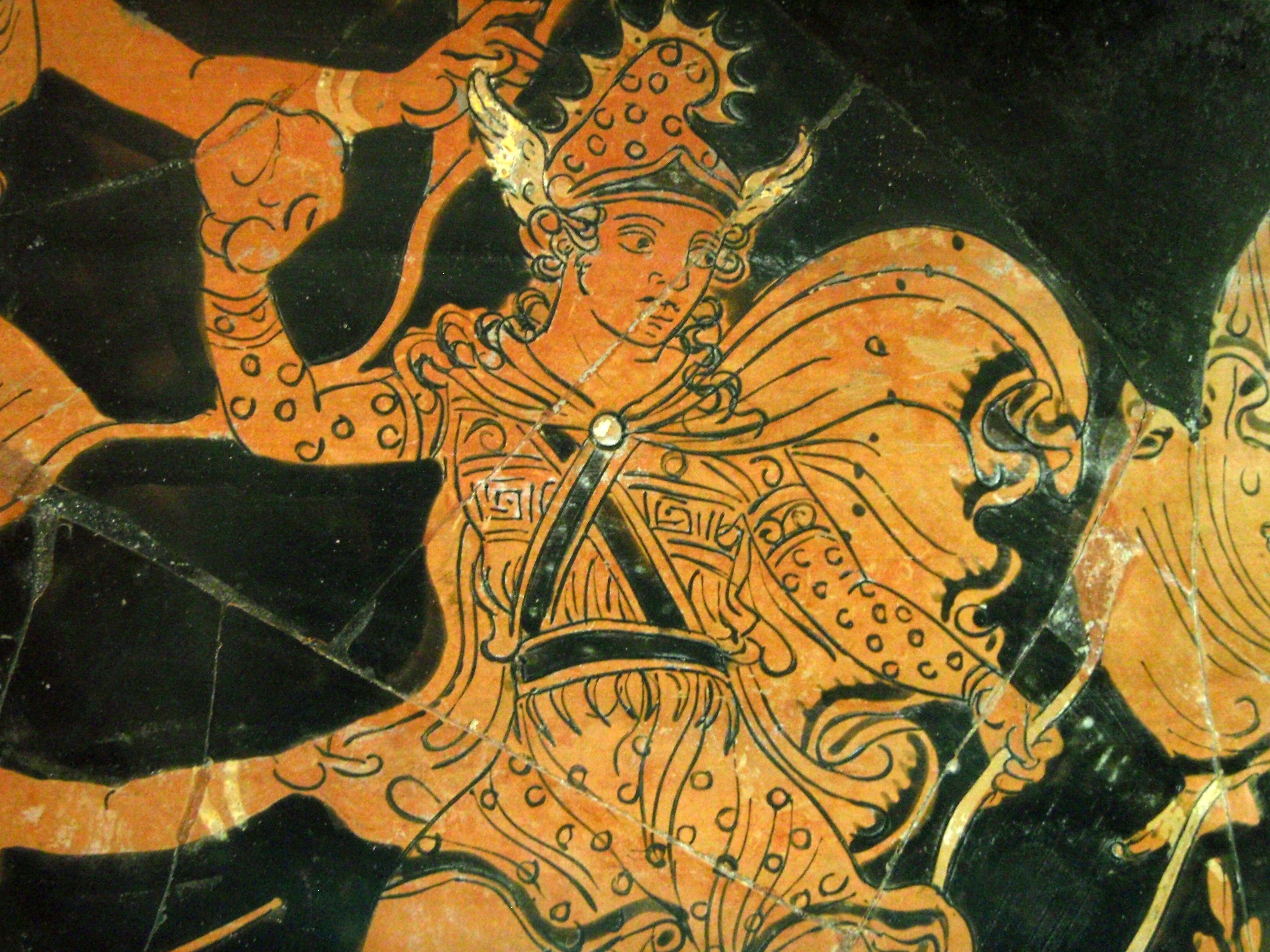
These are not the only symbols shared between the Mithraic and Orphic Mysteries, however; there is also this famous relief of Phanes:
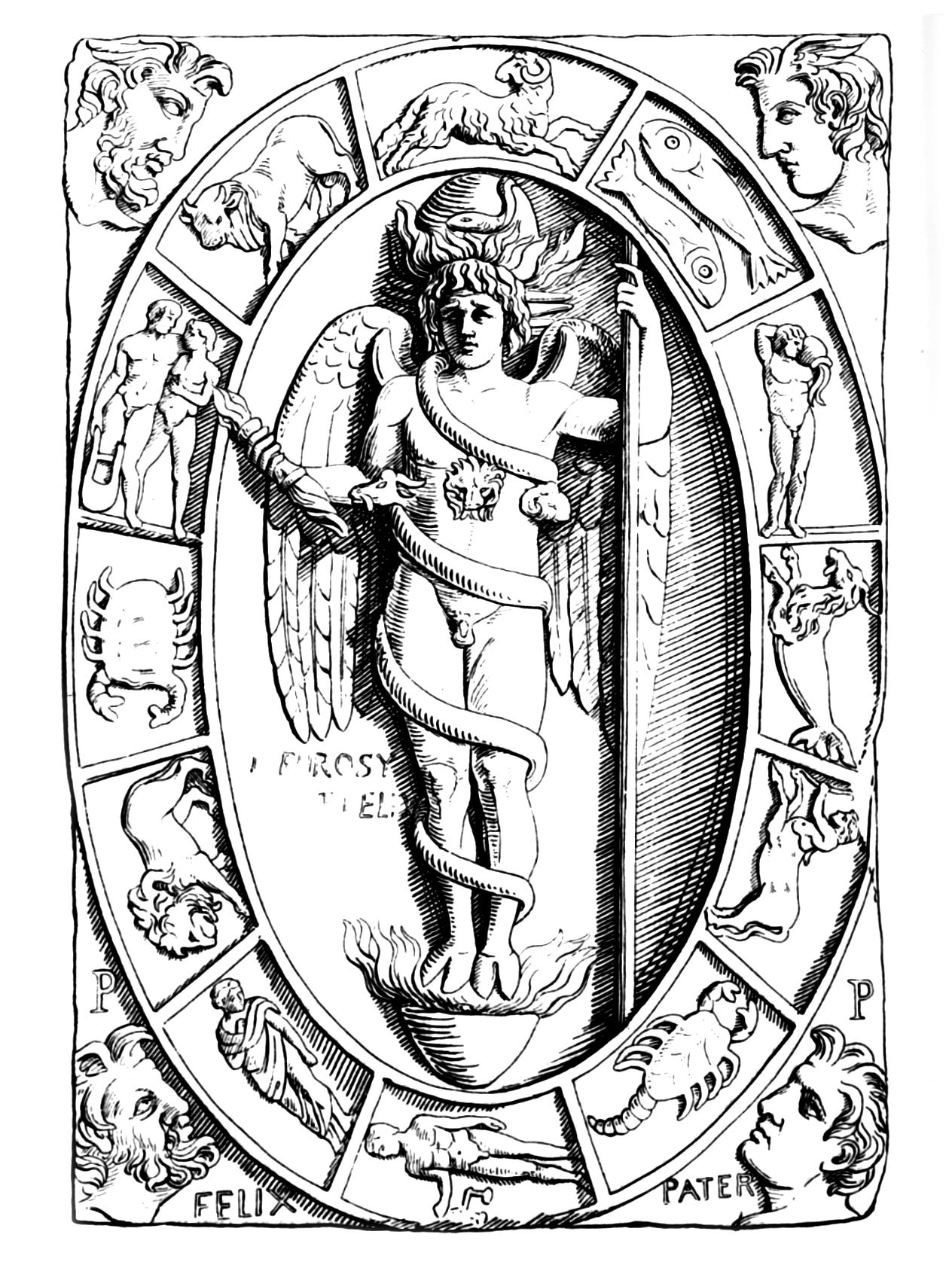

We know that this relief, used by a Mithraic cult to depict Aeon (Aion), was borrowed because the name Euphrosyne, one of the three Graces, is scratched out. Euphrosyne is a female figure, and Mithraic cults were male-only5.
As we saw in Part One, Aion is one of the names given to Herakles in his Orphic Hymn, where he is also called “father of time”, “self-grown” and “firstborn having flashed with scales”6. We also saw that, in the Hieronyman Theogony, Orpheus tells of a serpent God named both Unaging Time and also Herakles that arose as a third first-principle7 from the interaction between the first two first-principles, Water and Mud8. What we left out then was that afterwards, Time mingles with Necessity, also a serpent9, to produce an egg, from which hatches Protogonos Phanes10.
Herakles, as the First-Born (Protogonos), scaley, self-grown father of Time (i.e. Himself) must then also be the one who hatches from the egg, i.e. Phanes. But who else hatches from an egg?
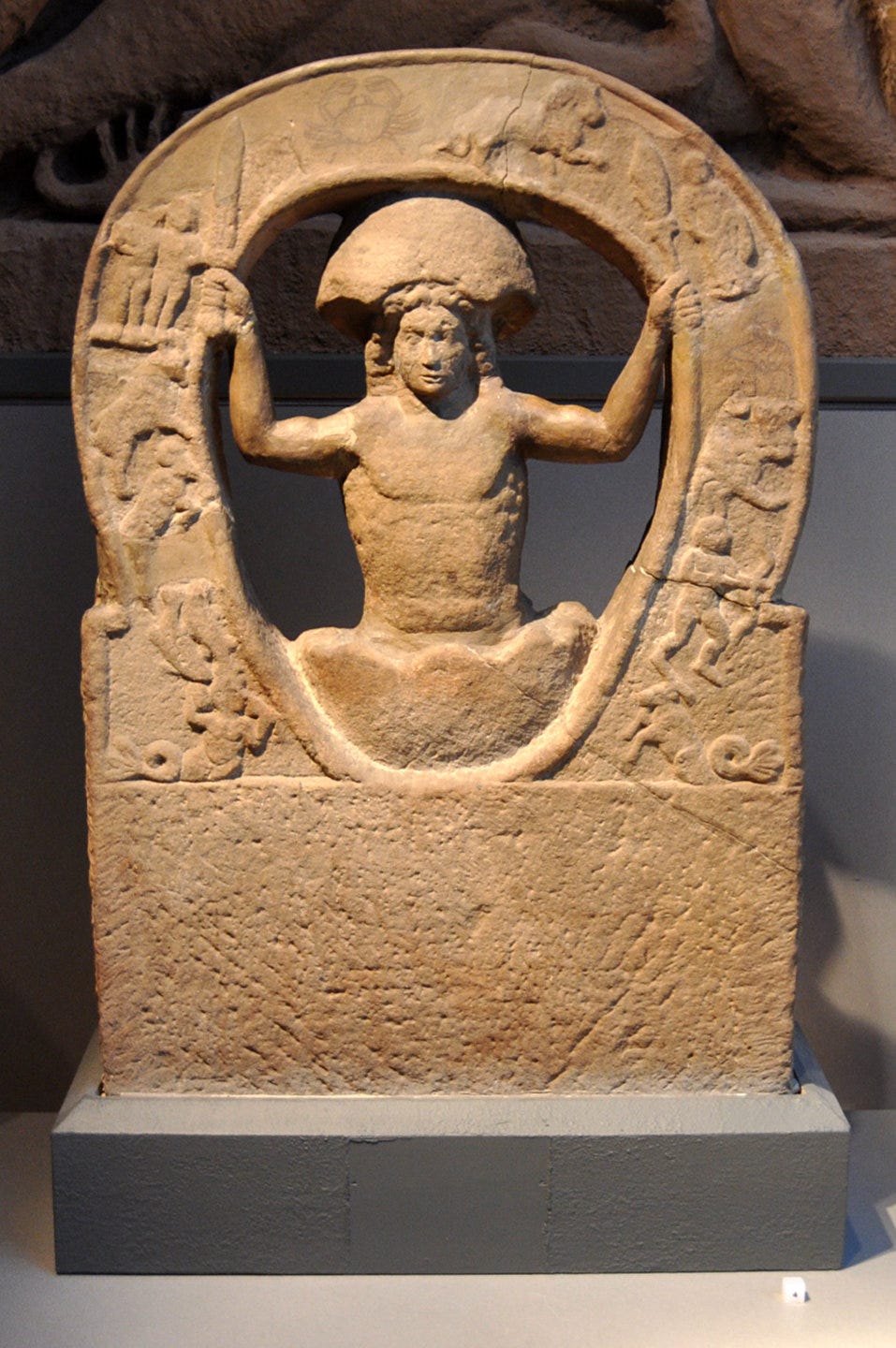
None more relevant than Mithras Himself. (Although, it is important to note, Mithras is also often depicted as emerging from a rock. To that counterargument, say: “What is Earth if not a rocky-egg lain in the Starry Aither?”)
